






How to Choose the Right Home Gym Equipment in India: A Beginner's Buying Guide (2026)

Introduction
Setting up a home gym in India has never been more popular — or more confusing. Walk into any online store and you'll find hundreds of products: dumbbells, resistance bands, yoga mats, ab rollers, pull-up bars, treadmills, and dozens of "smart" gadgets that promise miracle results.
So how do you pick what's actually worth your money?
Whether you're starting your fitness journey or upgrading from a gym membership to home workouts, this guide will help you make smart, budget-friendly choices. No fluff, no hype — just practical advice tailored for Indian homes, Indian budgets, and Indian lifestyles.
Why More Indians Are Choosing Home Workouts
Before we dive into the "what to buy," let's quickly cover the "why."
Home workouts have exploded in popularity across India for some clear reasons:
- Saves money — quality home gym equipment pays for itself in 6–8 months compared to a gym membership
- Saves time — no commute, no waiting for equipment, no peak-hour crowd
- Privacy and comfort — workout in your own space, at your own pace
- Consistency — when your gym is in your living room, "I'll go tomorrow" doesn't work as an excuse
- Family fitness — your equipment can be used by your spouse, parents, or kids too
The catch? You need to buy the right equipment — not the most expensive, not the trendiest. The right one for you.
Step 1: Define Your Fitness Goal First (Before You Buy Anything)
This is the biggest mistake most beginners make: they buy equipment first and figure out their goal later. Reverse that.
Ask yourself: what do I actually want to achieve in the next 3–6 months?
| Your Goal | What You Actually Need |
|---|---|
| Lose weight, burn fat | Resistance bands, jump rope, yoga mat, basic dumbbells |
| Build muscle and strength | Adjustable dumbbells, pull-up bar, sturdy bench |
| Improve flexibility and posture | Yoga mat, foam roller, resistance bands |
| General fitness and energy | Yoga mat, light dumbbells, jump rope |
| Recovery and pain relief | Foam roller, massage tools, resistance bands |
If you don't have a clear goal yet, that's okay — start with the General Fitness kit. It covers 80% of what most beginners need, costs less than ₹3,000 total, and gives you room to discover what you actually enjoy.
Step 2: Measure Your Space (Honestly)
Indian homes — especially apartments in metros like Mumbai, Delhi, Bengaluru, and Chennai — don't always have spare rooms. Be realistic.
Ask yourself:
- Do I have a permanent workout corner, or do I need foldable/storable gear?
- Can I lay flat on the floor without moving furniture?
- Is there a sturdy door frame for a pull-up bar?
- Is there enough vertical space for jump rope or stretching?
Quick space rule of thumb:
- Under 4×4 feet? Stick with mat-based gear: yoga mat, resistance bands, light dumbbells
- 4×6 feet available? Add a foldable bench, jump rope, ab roller
- 6×8 feet or more? You can fit larger equipment like a treadmill, exercise bike, or full dumbbell set
Don't buy a treadmill if you don't have space for one. It'll end up as a coat hanger — and we've all seen that happen.
Step 3: Set a Realistic Budget
You don't need ₹50,000 worth of equipment to get fit. In fact, the most-used home gyms in India cost between ₹2,000–₹8,000 total.
Here's a budget breakdown that actually works:
Starter Kit — Under ₹3,000
Perfect for beginners testing out home workouts.
- Yoga mat (good thickness, anti-slip)
- Resistance bands set (light, medium, heavy)
- Jump rope
- One pair of light dumbbells (2–5 kg)
Intermediate Kit — ₹3,000–₹8,000
For people getting consistent and ready to progress.
- Everything in starter kit
- Foam roller (for recovery)
- Adjustable dumbbells or heavier fixed dumbbells
- Pull-up bar (door-frame style)
- Ab roller
Advanced Kit — ₹8,000+
For serious home gym enthusiasts.
- Adjustable bench
- Heavier dumbbell set or kettlebells
- Treadmill or exercise bike
- Massage gun or recovery tools
Pro tip: Buy quality essentials first, not lots of cheap accessories. One good ₹1,500 yoga mat will outlast three ₹500 ones — and your knees will thank you.
Step 4: Prioritize These 5 Essentials (In This Order)
If you're truly starting from zero, buy these in order. Don't skip ahead.
1. Yoga Mat
The foundation of every home workout. Used for stretching, yoga, core exercises, HIIT, and even floor-based strength training. Look for 6–8mm thickness with anti-slip texture. Avoid the ultra-cheap ones — they tear within weeks.
2. Resistance Bands
The most underrated piece of fitness gear in India. They're cheap, take zero space, and can replace ₹20,000 worth of gym machines for beginners. Get a set of 3–5 bands with different resistance levels.
3. Jump Rope
The cheapest cardio tool ever invented. 15 minutes of skipping burns more calories than 30 minutes of jogging — and you can do it on your terrace or living room.
4. Dumbbells
Start with one pair in a comfortable weight (typically 2–5 kg for women, 5–10 kg for men). Adjustable dumbbells save space if your budget allows.
5. Foam Roller
Often skipped by beginners — and they regret it. Foam rolling helps recovery, reduces soreness, and prevents injuries. Worth every rupee.
6. Hand & Grip Strengthener
This one is criminally underrated by beginners. Strong hands = better lifts, better workouts, and fewer injuries. Whether you're starting weight training, doing pull-ups, or just want to relieve stress at your desk job, a grip strengthener delivers results in weeks — not months.
👉 Recommended: ShoppersDen Eagle Claw Hand Strengthener — ergonomic, non-slip, with adjustable resistance so it grows with you. ₹749 (down from ₹1,999). Loved by 230+ verified buyers including fitness trainers, musicians, and even people managing arthritis.
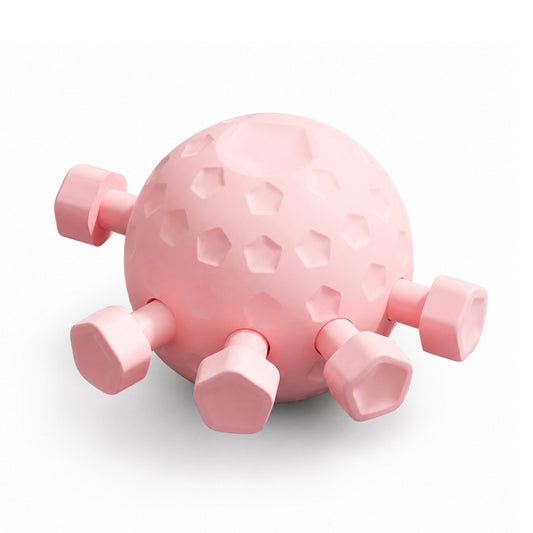
For a more advanced option, the ShoppersDen Gyro Hand Workout Ball (₹1,199) targets your wrists and forearms — perfect for anyone doing pushups, pullups, or sport-specific training.
7. Lower Body Trainer (Thighs, Hips, Pelvis)
Most beginner kits skip lower-body work entirely — which is why so many home workouts plateau. A simple thigh and pelvis trainer fills that gap without needing weights or machines.
👉 Recommended: ShoppersDen Hip & Pelvis Trainer – Thigh Toner — compact, beginner-friendly, and great for toning thighs, glutes, and pelvic floor muscles. ₹1,299 (down from ₹2,499). Especially useful for women post-pregnancy and anyone with a sedentary desk job.
Why These ShoppersDen Products Made the Cut
We didn't include these as random promotions. Each was chosen because:
- ✅ Compact and apartment-friendly — important for Indian homes
- ✅ Beginner-appropriate resistance levels — won't intimidate first-timers
- ✅ Affordable — all three together cost less than one gym machine
- ✅ Real customer feedback — verified buyer reviews back up the claims
Step 5: What NOT to Buy (At Least Not Yet)
Save your money. These are common purchases that beginners regret:
- ❌ Treadmills (initially) — expensive, space-hungry, and most people stop using them within 3 months. Try jump rope or outdoor walks first.
- ❌ Expensive smart fitness gadgets — most "AI fitness mirrors" and pricey tech aren't worth it for beginners.
- ❌ Random ab gadgets — that "vibrating belt" or "electronic ab stimulator" won't give you a six-pack. Diet and consistency will.
- ❌ Heavy weights early on — start light. Form matters more than weight at the beginning.
- ❌ Branded gear at premium prices — for entry-level products, Indian D2C brands offer 80% of the quality at 40% of the price.
Step 6: Where to Buy Home Gym Equipment in India
A few quick tips when shopping online:
- Read product reviews carefully — focus on reviews from verified Indian buyers
- Check return policies — at least 5–7 days for defective items is standard
- Compare prices but don't always go for the cheapest — fitness equipment is one area where build quality really matters
- Buy from trusted Indian brands — they understand local needs (apartment-friendly sizes, climate-suitable materials, quick delivery)
At ShoppersDen, we curate beginner-friendly fitness essentials specifically for Indian homes — quality-checked, reasonably priced, and delivered across India in 4–5 days.
Final Checklist Before You Click "Buy"
Before you finalize any purchase, ask yourself:
- Does this match my fitness goal?
- Will this fit in my space?
- Can I afford it without skipping the basics?
- Have I read the reviews?
- Does the seller offer easy returns?
If you can answer "yes" to all five — go ahead. If not, hold off and come back to this guide.
Quick FAQ
Q: What's the minimum equipment needed to start working out at home? A: A good yoga mat, a set of resistance bands, and a jump rope. That's enough for a full-body workout. Total cost: under ₹2,000.
Q: Are home workouts as effective as gym workouts? A: For 90% of fitness goals — weight loss, muscle tone, flexibility, energy — yes. Hardcore bodybuilding and powerlifting are the rare exceptions where a full gym helps more.
Q: How much space do I need for a basic home gym in an Indian apartment? A: As little as 4×4 feet (about 1.2 × 1.2 meters) is enough for mat-based workouts and dumbbell exercises.
Q: How long until I see results from home workouts? A: Most beginners see noticeable energy and strength changes within 3–4 weeks of consistent workouts. Visible body changes take 8–12 weeks.
Q: Should I buy used gym equipment? A: Avoid for personal hygiene items (mats, foam rollers). For dumbbells and basic metal equipment, used can be fine if it's not rusted or damaged.
Final Thoughts
Building a home gym in India isn't about copying influencers or chasing the latest fitness fad. It's about picking a few honest, well-made tools that match your space, your budget, and your goals — and then showing up consistently.
Start small. Stay consistent. Upgrade as you grow.
And when you're ready to start, browse our curated home fitness collection — handpicked for Indian beginners who want results without the hype.


